
10 Early Signs of Gum Disease You Should Never Ignore
By Dr. Namratha Umesh
Founder – Dental Conceptz
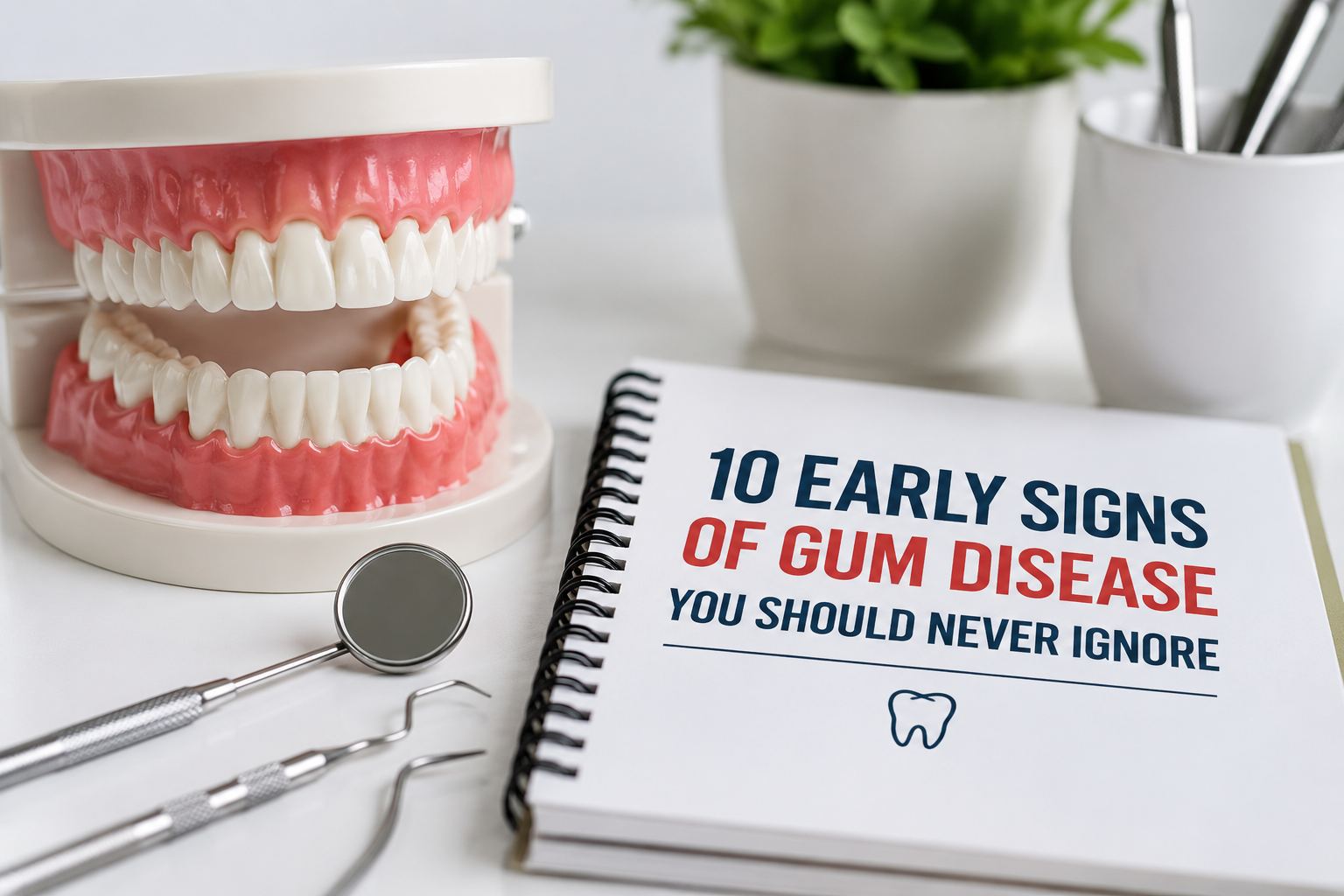
Most people don’t think much about their gums. They brush their teeth, maybe floss occasionally, and assume that as long as nothing hurts, everything is fine. But gum disease doesn’t usually announce itself with dramatic pain in the early stages, it creeps in quietly, through subtle changes that are easy to dismiss or explain away. By the time most people notice something is genuinely wrong, the condition has often progressed further than it needed to. Recognising the early signs of gum disease before it reaches that advanced stage is one of the most valuable things you can do for your long-term oral health and for your overall health, since gum disease symptoms have been consistently linked to systemic conditions including heart disease, diabetes complications, and respiratory issues. This blog covers the ten warning signs that should never be ignored, what they mean, and what happens if they are.
Why Gum Disease Is More Common Than Most People Realise
Gum disease, medically called periodontal disease is one of the most prevalent chronic health conditions in India. Studies suggest that a significant proportion of the adult population has some degree of gum disease, from mild gingivitis to more advanced periodontitis. Yet a large percentage of those affected are either unaware of it or have noticed symptoms they haven’t acted on.
The reason gum disease is so common is partly biological and partly behavioural. The bacteria responsible for gum disease exist naturally in the mouth. When oral hygiene is inadequate — or when other factors like smoking, stress, hormonal changes, or certain medications are present — these bacteria multiply and form plaque and tartar that trigger an inflammatory response in the gum tissue. That inflammation is the beginning of the disease process, and if left unaddressed, it progresses from the gum surface into the bone and tissue supporting the teeth.
Understanding the specific signs of this progression allows you to intervene early — when treatment is simpler, more effective, and significantly less expensive.
Sign 1: Bleeding Gums When You Brush or Floss
This is the most common and most universally dismissed early warning sign and it is the one that leads more people astray than any other.
When gums bleed during brushing or flossing, the most frequent explanation people give themselves is that they’re brushing too hard or that the floss cut the tissue. Occasionally this is true. But consistent bleeding, gums that bleed most times you brush regardless of the pressure you use, is almost always a sign of inflammation in the gum tissue, not mechanical trauma.
Healthy gum tissue does not bleed from normal brushing or flossing. Inflamed gum tissue — the early stage of gingivitis bleeds because the inflammation increases the fragility of the tissue and the blood vessel density within it.
This is the most important sign to act on precisely because it is the most treatable stage. Gingivitis, caught at the bleeding gums stage, is typically reversible with professional cleaning and improved home care. The same condition left untreated for months progresses to periodontitis — which is not reversible, only manageable.
Sign 2: Red or Swollen Gums
Healthy gum tissue is firm, pale pink, and fits snugly around the base of each tooth. Gums that appear red, puffy, or swollen — particularly around the gumline rather than from an obvious injury — are showing visible signs of inflammation.
This change in appearance is one of the clearest Signs of Gum Disease and one that a dentist or periodontist will notice immediately during an examination, even if the patient hasn’t. Many patients become aware of it only when it’s pointed out because the change can be gradual and the colour difference subtle in early stages.
Swelling typically indicates that the body’s immune response to bacterial infection is active in the gum tissue. The gums are fighting an infection and losing ground if the infection isn’t professionally addressed.
Sign 3: Persistent Bad Breath That Doesn’t Improve
Bad breath also called halitosis has multiple possible causes, but persistent bad breath that doesn’t respond to brushing, mouthwash, or dietary changes is a specifically significant warning sign for gum disease.
The bacteria that cause periodontal disease produce volatile sulphur compounds as a byproduct of their activity. These compounds have a distinctive, unpleasant odour that doesn’t come from the teeth themselves or from food, it comes from the bacterial colonies in the spaces between the teeth and gums, and beneath the gumline where home care doesn’t reach.
A persistent bad taste in the mouth, particularly a metallic or foul taste that isn’t related to food, can indicate the same bacterial activity and sometimes the presence of an abscess or discharge from infected gum tissue.
If bad breath is a recurring concern despite thorough home hygiene, a gum health assessment is essential, not just a new mouthwash.
Sign 4: Gums That Are Pulling Away From the Teeth
Gum recession, the visible pulling back of gum tissue from the base of the teeth is one of the signs of periodontal disease that patients typically notice when their teeth start to appear longer than they used to, or when they can see more of the tooth root than before.Recession can happen gradually and may not be noticed until it’s quite pronounced. It occurs because the inflamed gum tissue and the underlying bone are being destroyed by the bacterial infection — and as the tissue recedes, it exposes the more sensitive root surface of the tooth.
Recession has two significant consequences beyond the visible change in appearance. The exposed root surface is more susceptible to decay, since it lacks the protective enamel that covers the crown of the tooth. And the sensitivity that often accompanies recession — to cold, heat, sweet, and touch — can become quite uncomfortable.
Recession that has occurred cannot be fully reversed, though surgical procedures can restore gum tissue coverage in some cases. Stopping the recession from progressing further is always possible with appropriate treatment.
Sign 5: Increased Tooth Sensitivity
Tooth sensitivity — particularly to cold or to changes in temperature — is often associated with dental cavities or enamel erosion, but it is also a common symptom of gum recession and gum disease progression.
When gum tissue pulls back from the tooth root, the dentinal tubules, microscopic channels that connect the outer surface of the root to the nerve inside the tooth are exposed to external stimuli. Cold liquids, cold air, sweet foods, and acidic items all trigger the nerve response through these tubules, producing the sharp, brief pain that many people recognise as sensitivity.
New or worsening sensitivity in a tooth that was previously comfortable particularly when any other sign accompanies it on this list is worth having assessed professionally rather than managing with sensitivity toothpaste alone. The toothpaste may reduce the symptom without addressing the underlying cause.
Sign 6: Loose or Shifting Teeth
This sign represents a more advanced stage of gum disease — but it still constitutes a warning rather than an outcome if it’s addressed. Teeth that feel loose when you bite down, or that have visibly shifted in position relative to other teeth, are showing the effects of bone loss beneath the gumline.
Periodontal disease breaks down the bone and connective tissues which secure teeth in the jaw socket. With the breakdown of the supporting structure, the teeth become unstable. In the initial stages, there may be a feeling of slight looseness of the teeth or they may even be movable by applying gentle pressure to them. At advanced stages, spaces appear between adjacent teeth.
Tooth shifting also occurs when the force balance in the mouth changes — when multiple teeth have lost bone support, the remaining teeth are subjected to different biting forces that gradually move them from their original positions.
Sign 7: Pain When Chewing
Discomfort or pain during chewing — particularly a sensation of pressure or aching when biting down — can indicate gum disease, particularly when it affects multiple teeth rather than a single tooth.
Pain associated with biting on a specific tooth is more commonly associated with a crack, a failing restoration, or a dental abscess. Pain or discomfort that is more generalised, or that occurs primarily in areas where other gum disease signs are present, is more likely related to the periodontal condition.
This happens because the infected and inflamed tissues surrounding the tooth root get squeezed while chewing, and because the weakening of the bone has led to the reduction in the shock absorbing ability of the tooth.
Sign 8: Gum Infection Symptoms Including Pus or Discharge
The presence of pus or discharge near the gumline, a visible sign of active infection in the tissue, is one of the Gum Infection Symptoms that represents a more urgent situation requiring prompt professional attention. Pus typically appears as a white or yellow discharge near the margin between the gum and the tooth, or from a pocket between the gum and the tooth when gentle pressure is applied. It is accompanied by a bad taste in the mouth and often significant bad breath. Pus indicates that the infection in the gum tissue has developed into an abscess, a localised collection of infection. Dental abscesses require professional drainage and treatment. They do not resolve on their own, and left untreated, they spread into the surrounding bone and potentially into the neck and jaw in serious cases.
Sign 9: Changes in the Way Your Bite Fits Together
When the bones and tissue supporting the teeth are affected by periodontal disease, the position of the teeth within the jaw changes and one of the ways this manifests is through changes in how the upper and lower teeth come together when you bite.
Patients describe this as a bite that feels different from usual, or as teeth that seem to close in a slightly different way. This can be subtle and easy to dismiss as imagination, but a changed bite that persists, particularly in combination with other signs on this list, should be professionally assessed.
Changes in bite alignment that go unaddressed place abnormal forces on specific teeth, accelerating the wear and damage to those teeth and potentially affecting the jaw joint.
Sign 10: Higher Risk If You Have Diabetes
Gum disease in diabetic patients deserves specific mention because the relationship between diabetes and periodontal disease is bidirectional in a way that significantly amplifies the risk for both conditions.
Poorly controlled blood sugar creates conditions in the mouth — elevated glucose in saliva, impaired immune response, reduced healing capacity — that allow gum disease bacteria to thrive and progress more rapidly than in non-diabetic patients. At the same time, active gum infection makes blood sugar harder to control by triggering systemic inflammation that affects insulin sensitivity.
If you have diabetes and have noticed any of the signs listed above or if you haven’t had a dental check-up that specifically evaluated your gum health recently, a periodontal assessment is a genuinely important part of managing your overall health, not just your dental health.
What Happens If These Signs Are Ignored?
The progression of untreated gum disease follows a predictable and increasingly serious path. Gingivitis — the reversible early stage characterised by bleeding and inflamed gums — progresses to periodontitis when the infection moves below the gumline and begins destroying bone and tissue. Advanced periodontitis results in significant bone loss, loose teeth, and eventually tooth loss in the affected areas.
Beyond the mouth, research has established consistent associations between advanced gum disease and cardiovascular disease, complications in diabetes management, pregnancy complications, and respiratory conditions. The mouth is connected to the rest of the body — and chronic infection in the gum tissue has systemic consequences that extend well beyond the teeth.
Gum Disease Treatment Bangalore - What the Process Involves
The treatment for gum disease depends on the stage and severity of the condition at the time it’s diagnosed.
For early-stage gingivitis, professional cleaning scaling to remove tartar buildup above and at the gumline combined with improved home care is typically sufficient to reverse the inflammation and restore gum health.
For more advanced periodontitis, deeper cleaning procedures, scaling and root planing, sometimes called deep cleaning — remove bacterial deposits from below the gumline and from the root surfaces. This reduces the bacterial load in the gum pockets and allows the tissue to begin healing.
In cases where significant pocket depth and bone loss have occurred, surgical periodontal treatment may be appropriate procedures that access the deeper areas of infection and, in some cases, regenerate lost bone and tissue.
At Dental Conceptz, with clinics in Sahakaranagar and Jakkur Layout, the periodontal team includes two MDS-qualified Periodontists, Dr. Suprith and Dr. Sushmitha who specializes specifically in gum disease diagnosis and treatment at all stages. As a Dental Clinic in Sahakaranagar and Jakkur with 24+ years of clinical experience, the practice offers the full spectrum of periodontal care from early intervention through advanced surgical treatment, alongside the comprehensive multi-specialty care of the full Dental Conceptz team led by Dr. Namratha Umesh.
If you’ve noticed any of the signs described in this blog — or if you can’t remember the last time your gum health was specifically assessed — a periodontal evaluation is the right next step. The earlier it’s caught, the simpler and more effective the treatment.
FAQs
1. What are the early signs of gum disease?
Bleeding gums, redness, swelling, bad breath, and receding gums are common early signs of gum disease.
2. Can gum disease go away on its own?
No. Early gum disease can be treated with professional cleaning, while advanced gum disease needs ongoing care.
3. Are bleeding gums always a sign of gum disease?
Frequent bleeding while brushing or flossing is often an early sign of gum disease and should be checked by a dentist.
4. How is gum disease treated?
Treatment may include professional cleaning, scaling and root planing, or periodontal treatment, depending on the severity.
5. What is the link between diabetes and gum disease?
Diabetes can increase the risk of gum disease, and gum infections can make blood sugar harder to control.
6. Can gum disease cause tooth loss?
Yes. Untreated gum disease can damage the supporting bone and gums, leading to tooth loss.
7. Are dental implants painful?
How often should I see a dentist if I have gum disease?
8. Where can I get gum disease treatment in Bangalore?
Dental Conceptz in Sahakaranagar and Jakkur offers gum disease treatment by experienced MDS-qualified Periodontists.