
Are Dental Implants Painful? What to Expect Before, During, and After Surgery
By Dr. Namratha Umesh
Founder – Dental Conceptz
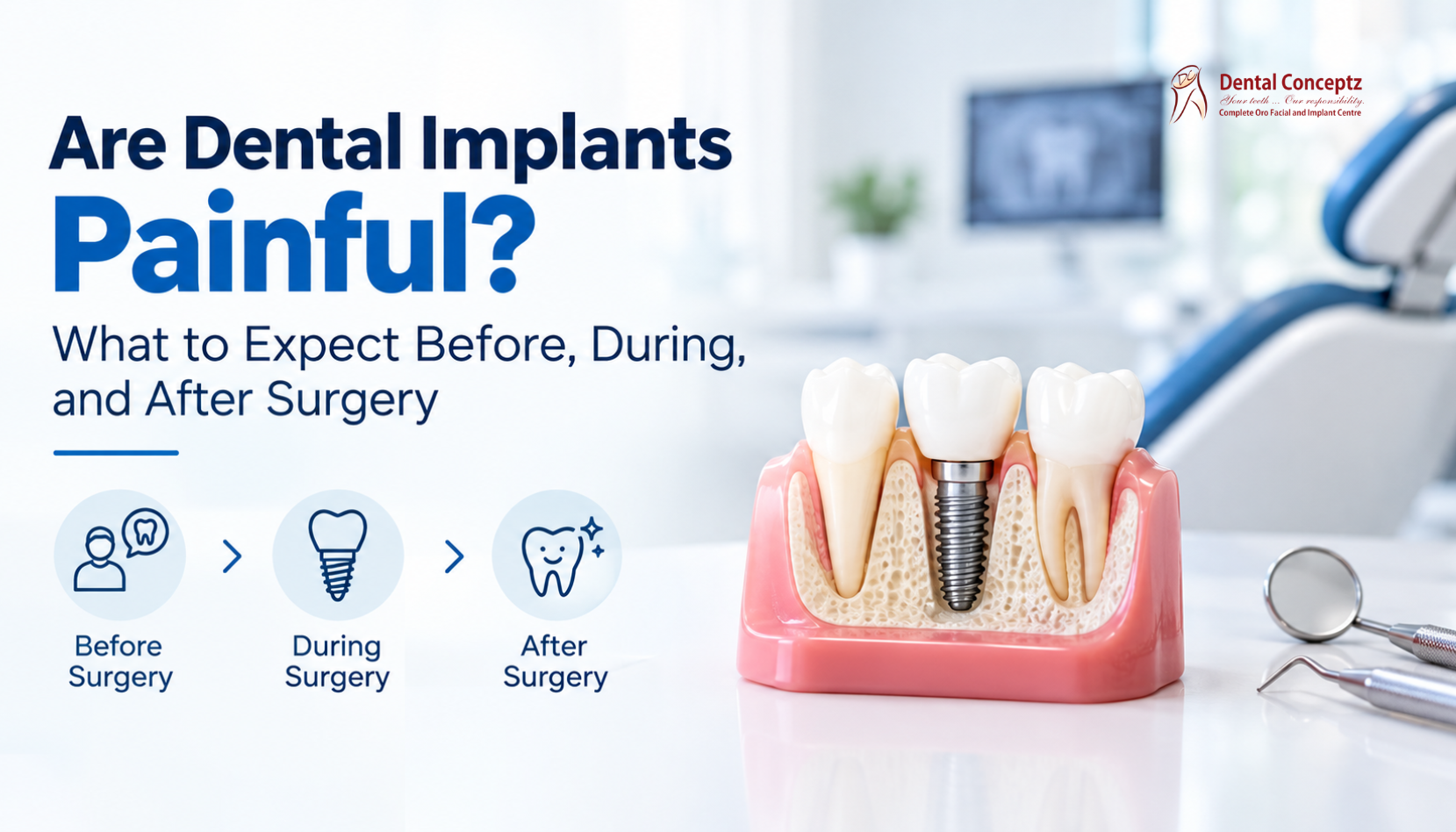
Of all the questions that come up when someone is considering a dental implant, this one comes up first almost every time. Are dental implants painful? It’s the question that holds more people back from a treatment they genuinely need than any other, including the cost. The reputation that implant surgery has for being a painful, difficult procedure has spread largely through second-hand stories and outdated information, because the reality of modern implant placement under proper anaesthesia is significantly different from what most people imagine. If the fear of pain during implant placement has been keeping you from having a conversation with a dental specialist, this blog gives you the complete, honest picture — what happens before surgery, what the procedure actually feels like, and what the recovery genuinely involves day by day.
The Most Important Thing to Know Upfront
Here it is, stated directly: the implant surgery itself is not painful.
This isn’t reassurance designed to get you into the chair. It’s a clinical fact that the vast majority of implant
patients confirm after the procedure — many of them surprised by how different the experience was from their
expectations.
The reason the surgery isn’t painful is local anaesthesia. Before any aspect of implant placement begins, the
treatment area is comprehensively numbed. The anaesthetic is injected into the gum tissue and the surrounding
area, ensuring that the operative site has no nerve sensation for the duration of the procedure. A
well-administered local anaesthetic eliminates pain at the surgical site completely.
What patients feel during the procedure is pressure and vibration, the physical sensation of instruments working
in the mouth without the pain that would normally accompany it. Some patients find this sensation mildly
uncomfortable or psychologically strange. Most describe it as far less unpleasant than they anticipated. The
moment patients most commonly report as the most uncomfortable is the initial anaesthetic injection itself, which
is brief and significantly less uncomfortable than the throbbing pain of an untreated infected tooth.
Before Surgery
The Consultation and Planning Phase
Dental implant facts that patients often don’t know before their first consultation: a significant amount of work
happens before any surgical procedure begins, and this preparation is what makes the surgery predictable and the
recovery manageable.
During the pre-surgery process, an extensive clinical examination, dental radiographs, and most importantly, a 3D
image using cone-beam computed tomography (CBCT) are performed. The 3D image helps the dentist determine the exact
dimensions of the jawbone, the location of vital anatomical structures such as the nerve and sinus cavities, and
bone density.
This planning means the implantologist arrives at surgery knowing exactly where the implant will be placed, at
what angle, to what depth, and with what size fixture. There are no surprises during the procedure, every aspect
has been mapped and prepared. This is fundamentally different from dental procedures conducted without proper
digital planning, and it’s one of the reasons implant surgery with an experienced, well-equipped practitioner is
so much more predictable and controlled than patients expect.
Managing Anxiety Before the Procedure
For patients with significant dental anxiety, discussing this with the dental team before the appointment allows
for appropriate management strategies. Techniques ranging from distraction and breathing strategies to oral
sedation for particularly anxious patients mean that how painful implant surgery is on an anxiety level can be
specifically addressed rather than endured.
During Surgery
The procedure itself typically takes between one and two hours for a single implant placement, though this varies
depending on whether any additional procedures are needed, bone grafting, sinus augmentation, or multiple implant
placements.
The sequence of events during surgery:
- The local anaesthetic is administered. This involves one or more injections into the gum tissue. The tissue is then tested with a blunt probe to confirm complete numbness before any incision is made.
- A small incision is made in the gum tissue to expose the bone beneath.
- The implant site is prepared using a series of graduated drills that create the precise channel in the bone for the implant. This drilling involves vibration and pressure sensations but with proper anaesthesia, no pain.
- The titanium implant post is placed into the prepared site.
- The gum tissue is sutured closed over the implant, or in some cases a healing cap is attached to keep the implant site accessible.
The entire time the patient is numb, the procedure progresses without pain. The pressure sensations experienced can be managed with breathing techniques and communication with the clinical team — if at any point something feels like pain rather than pressure, informing the surgeon immediately allows additional anaesthetic to be administered.
After Surgery
This is the phase that varies most between patients, and it’s the phase where realistic expectations genuinely
matter.
The First 24 to 48 Hours
Once the local anaesthetic wears off, typically two to four hours after the procedure, patients begin to feel the
normal post-surgical inflammatory response.
Implant pain surgery at this stage is described by most patients as a dull ache and pressure at the surgical site,
often accompanied by swelling and some bruising of the surrounding soft tissue.
The level of dental implant recovery pain during this period is genuinely variable between patients — influenced
by the complexity of the procedure, how extensive any bone preparation was, individual pain sensitivity, and
whether any additional procedures like bone grafting were performed alongside the implant placement.
For most patients with straightforward single implant placements, the discomfort in the first 24 to 48 hours is
manageable with standard over-the-counter pain relief paracetamol or ibuprofen taken as directed. The discomfort
is present and noticeable, but it does not typically prevent normal daily function. Most patients who have had
other dental procedures, tooth extractions, root canal treatment, wisdom tooth removal, describe implant recovery
as comparable to or less uncomfortable than those experiences.
Implant Surgery Swelling and Pain
Swelling is a normal part of the healing response after implant surgery. It typically peaks at 48 to 72 hours
after the procedure and then gradually subsides over the following three to four days.
Applying an ice pack to the external cheek surface in the first 24 hours 20 minutes on, 20 minutes off reduces
swelling and provides comfort. After the first 24 hours, switching to gentle warmth is more appropriate.
Some bruising of the surrounding soft tissue is normal and will resolve over seven to ten days.
The First Week
Dental implant procedure pain in the first week after surgery follows a predictable trajectory for most patients:
most noticeable in the first two to three days, progressively improving from days three through seven, with most
patients experiencing minimal discomfort by the end of the first week.
Maintaining the prescribed medication schedule during the first 48 hours — rather than waiting until discomfort
becomes significant before taking pain relief — keeps the inflammatory response controlled and makes the recovery
significantly more comfortable.
Soft food for the first week- soup, yoghurt, soft cooked vegetables, eggs- protects the surgical site and reduces
direct pressure on the healing tissue. Avoiding hot foods and beverages, and rinsing gently rather than with
vigorous force, protects the sutures and allows undisturbed healing.
A proper understanding of the entire healing process will assist the patient in having realistic expectations and prevent any undue worry.
- First week - this is the beginning of the healing process and is done using medications and dietary changes. Pain will largely disappear during this time.
- Weeks two to four - surface gum tissue heals completely. Sutures are typically removed or dissolved within one to two weeks. Most patients return to normal diet and normal function within this window.
- Months two to six - osseointegration, the process by which the titanium implant fuses with the surrounding jawbone through biological integration. During this period, the implant site is typically not symptomatic. Healing is happening beneath the surface, without discomfort. The patient is usually not aware of the process at all during this phase.
- Final restoration - once osseointegration is confirmed, the abutment is attached, and the crown is fitted. This final phase involves no surgery; it’s a minor, comfortable clinical procedure.
Dental Implant Surgery Pain Level
One of the most useful ways to contextualise implant surgery for patients who have had other dental procedures is
to compare the pain experience directly.
Compared to tooth extraction, implant surgery is generally described as comparable in discomfort level, with
similar post-operative management and a similar recovery timeline.
Compared to root canal treatment, many patients who have had both describe the implant recovery as no more
uncomfortable than root canal treatment, and some describe it as less uncomfortable because the source of
infection that drives root canal discomfort is absent.
Compared to the untreated problem of a missing tooth that leads to bone loss, shifting of adjacent teeth, bite
changes, and eventually further tooth loss- it involves a progressive deterioration that is both clinically
significant and ultimately more disruptive than the surgical procedure that prevents it.
Dental Implants vs Dentures Comparison
When it comes to choosing between dental implants and dentures, there is a significant need to consider the issue
of pain and discomfort on both fronts.
The implant procedure involves a defined surgical phase with manageable recovery, after which the patient has a
fixed, stable, natural-feeling restoration that requires no special maintenance and causes no ongoing discomfort.
While dentures do not involve surgery, they create a whole new kind of discomfort. The use of dentures entails
going through an often lengthy adjustment process. Dentures have been known to irritate gums because the jawbone
underneath the dentures continues to change due to the absorption of the bones. Dentures tend to shift when you
eat and talk. They need to be removed for cleaning. And finally, re-lining or replacing poorly fitting dentures is
another source of discomfort.
The comparison isn’t between the discomfort from an implant surgery and no discomfort at all; rather, it is a
comparison between temporary recovery from surgery and continued long-term problems. Most people who have
experienced both consider implants to be more comfortable on a long-term basis.
What the Team at Dental Conceptz Offers for Implant Patients
Single tooth implant cost in
Bangalore, and the quality of the surgical experience, depend significantly on the skill and training of the
implantologist and the technology used for planning and placement.
At Dental Conceptz, dental implant surgery is led by Dr. Namratha Umesh, an MDS Prosthodontist and Implantologist
with over 5,000 successful implantations. Her training includes personal instruction from Dr. Paulo Malo, the
developer of the ALL-ON-4 protocol — alongside advanced training in bone management techniques from Switzerland,
Germany, Spain, Poland, and Brazil.
Does the implant surgery hurt when done by an experienced specialist with adequate digital planning, suitable
anesthesia, and meticulous surgical technique? According to the results from more than 5,000 surgeries, there is
no pain from the surgery itself, and the healing process is easily controlled.
With clinics in Sahakaranagar and Jakkur Layout, Bangalore, the team at Dental Conceptz approaches every implant
consultation with the understanding that patient anxiety about the procedure is real and deserves honest, specific
information, not generic reassurance.
FAQs
1. Are dental implants painful to get?
No. Local anaesthesia prevents pain during the procedure. Mild soreness and swelling may occur for a few days after surgery.
2. How long does pain last after dental implant surgery?
Discomfort is usually strongest for 24–48 hours and improves over the next few days. Most straightforward cases have minimal pain within a week.
3. What does a dental implant feel like during placement?
You may feel pressure and vibration, but not pain because the area is numbed.
4. How do I manage pain after dental implant surgery?
Follow your dentist’s medication advice, use ice during the first 24 hours, eat soft foods, and avoid pressure on the surgical area.
5. Is dental implant surgery more painful than tooth extraction?
Most patients find the discomfort similar to a tooth extraction, with soreness and swelling during recovery.
6. Can I go to work after dental implant surgery?
Most people can return to desk work the next day. Avoid strenuous activity for a few days as advised by your dental team.
7. What is the recovery time for dental implant surgery?
Initial recovery usually takes 5–7 days. Complete implant healing and bone integration can take around 3–6 months.
8. How can I reduce swelling after dental implant surgery?
Use an ice pack during the first 24 hours, keep your head elevated, and follow your dentist’s medication and aftercare instructions.